
Informed By Conservation Science
We use conservation planning maps produced by state agencies to locate critical conservation lands that are priorities for protection in our service area – the Eastern temperate forest ecoregion in the states of South Carolina, North Carolina, Virginia, West Virginia, and Ohio
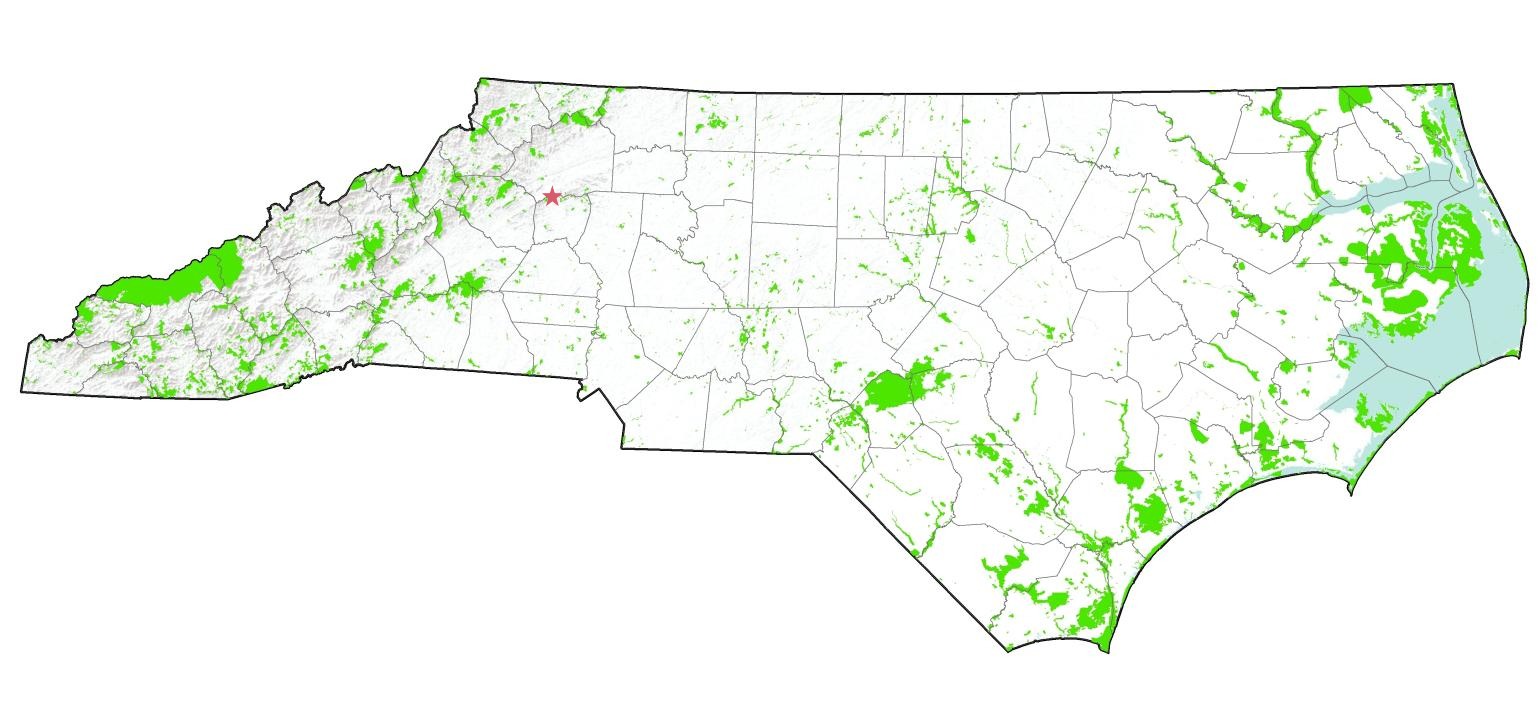
An Active Approach to Conservation Land Protection
- We then use those maps to find undeveloped land listed for sale that is mapped as a priority for protection, and that meets our criteria for purchase
- Our criteria for purchase include: land abutting existing protected land, existing natural sources of water, the presence of rare, endemic and threatened species on the property, distance from major development and highways, the lack of structures and pervious surfaces on the property, if the property is subject to an HOA, the site’s habitat diversity, and the condition and size of the tract
- Next, we search for funding sources to purchase the property and conservation partners that will protect it long-term through legal mechanisms including conservation easements and deed restrictions
We Negotiate and Manage the Purchase Transaction and Final Ownership
- When a property has been identified that meets the above criteria, we negotiate for the purchase of the property and manage the real estate transaction to closing
- After closing, we transfer the property to a partner organization for long-term ownership, with legal protections in place ensuring it will be managed as a nature preserve.

 Forestlands Conservation Foundation